This debate has played out before. During the COVID-19
Fupio is the easiest way to share online Learn more »
Join FupioStripe Economics
Internet economics data and analysis, from Stripe.
This debate has played out before. During the COVID-19
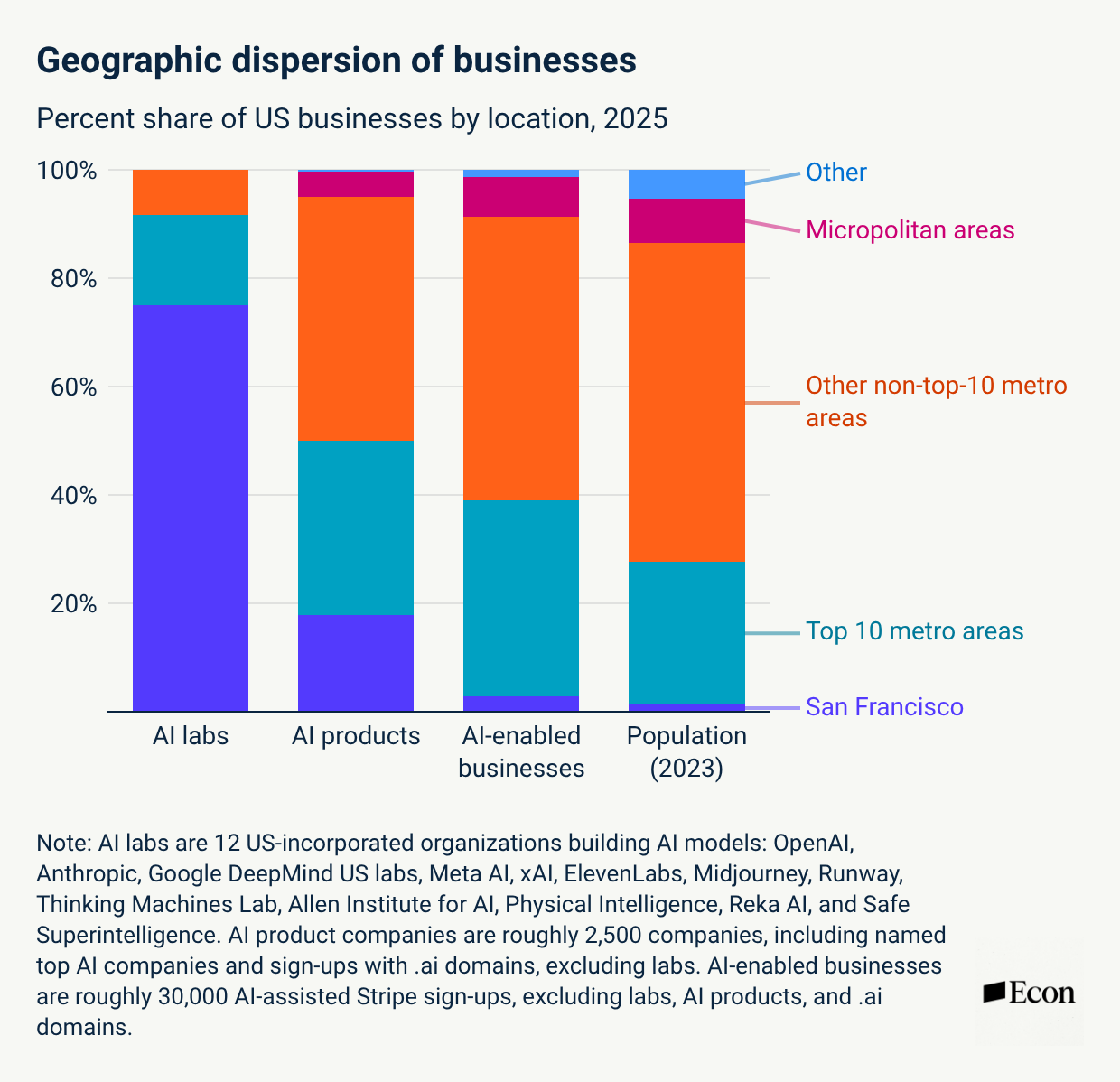
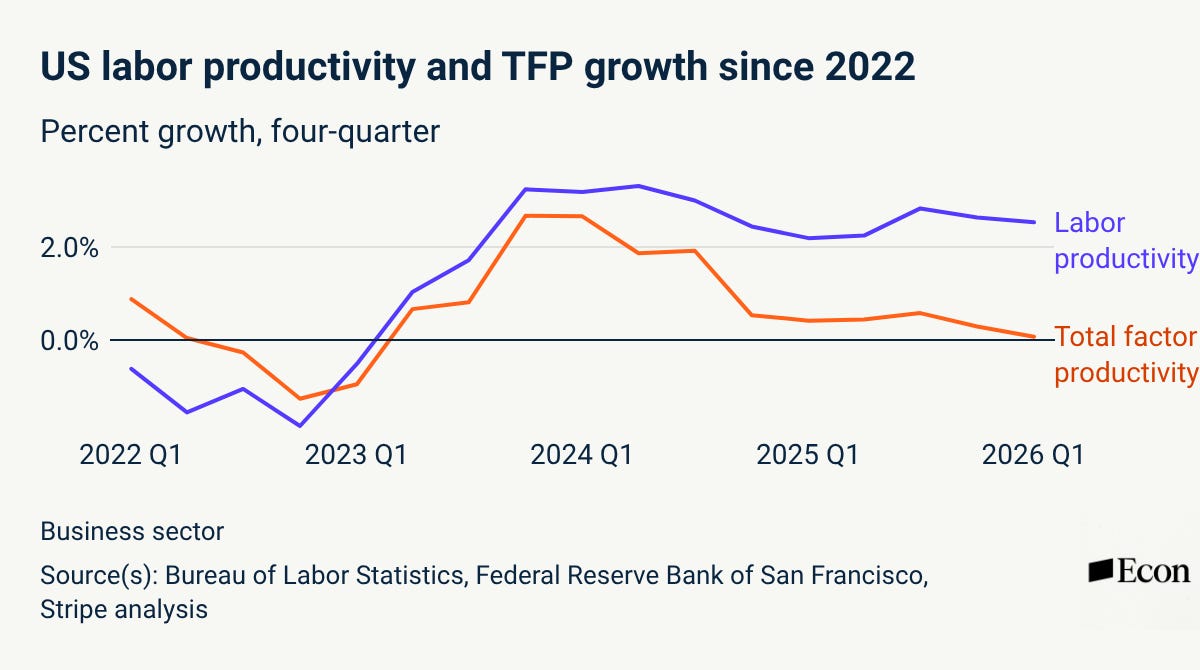
www.stripeeconomics.comAI and productivityThe story in the data so far (briefly)
UK statistics show business creation flat or even declining over the past 2 years. Is the UK really falling behind or is something else afoot? In this appendix to our last post, we triangulate across Stripe data and public statistics, and conclude that the UK is likely seeing its own business formation boom that government
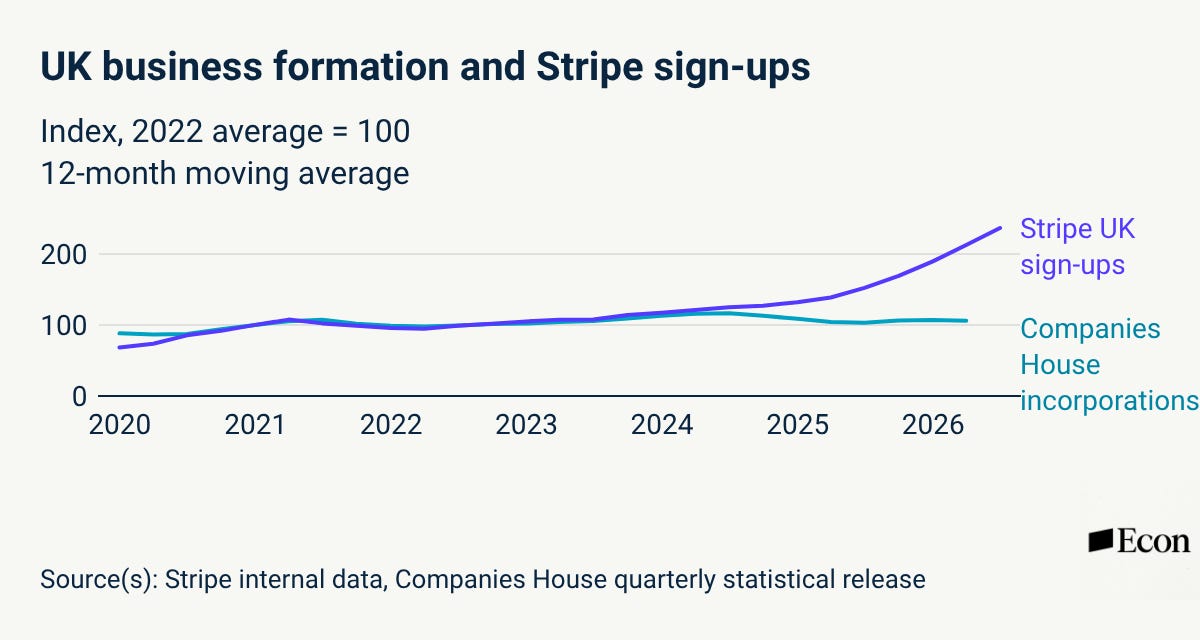
www.stripeeconomics.comIs the UK missing out on the solopreneur boom?Government statistics would say yes, Stripe data suggests otherwise
https://www.stripeeconomics.com/p/revealed-willingness-to-pay-for-ac

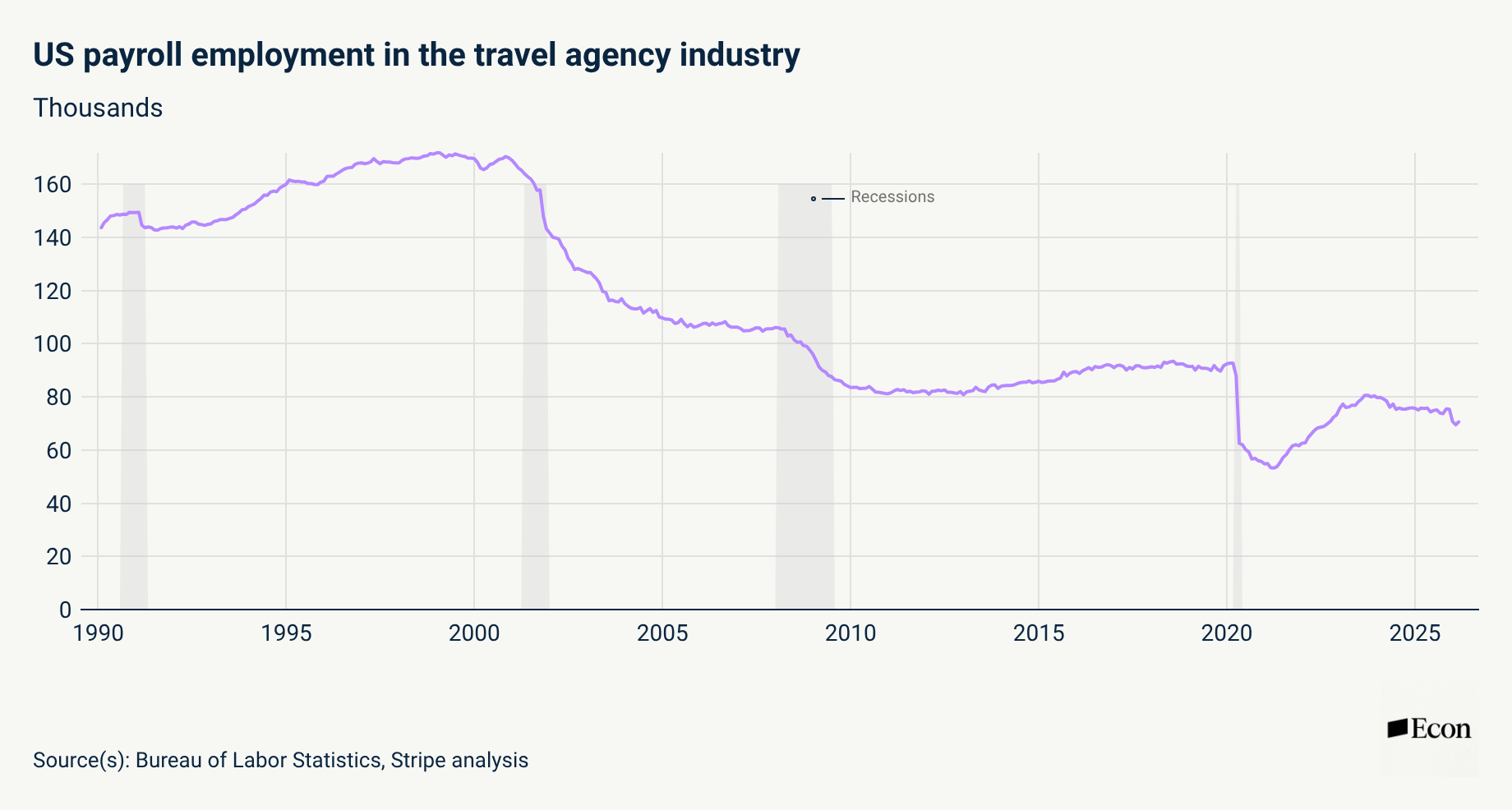
By the early 2020s, these assumptions started creaking. The Census Bureau noticed that solo operators in some sectors were
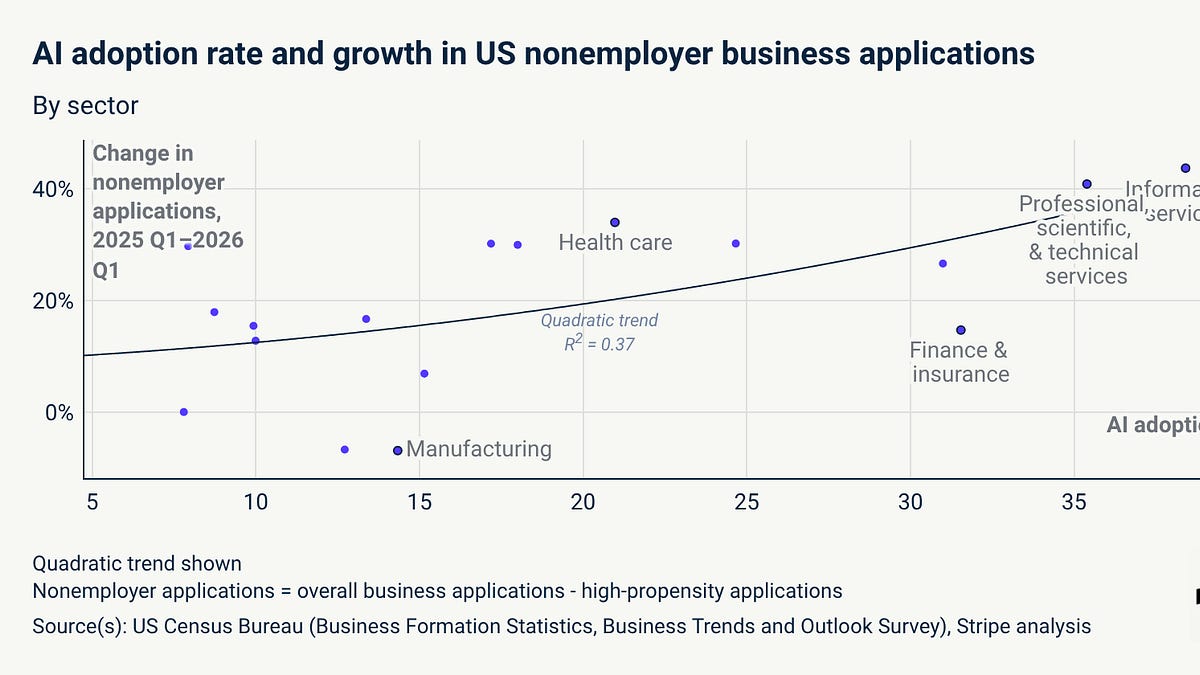
www.stripeeconomics.comThe age of the solopreneurMore solo founders, growing faster, powered by AI
Subscribe now
The rise of solopreneurs
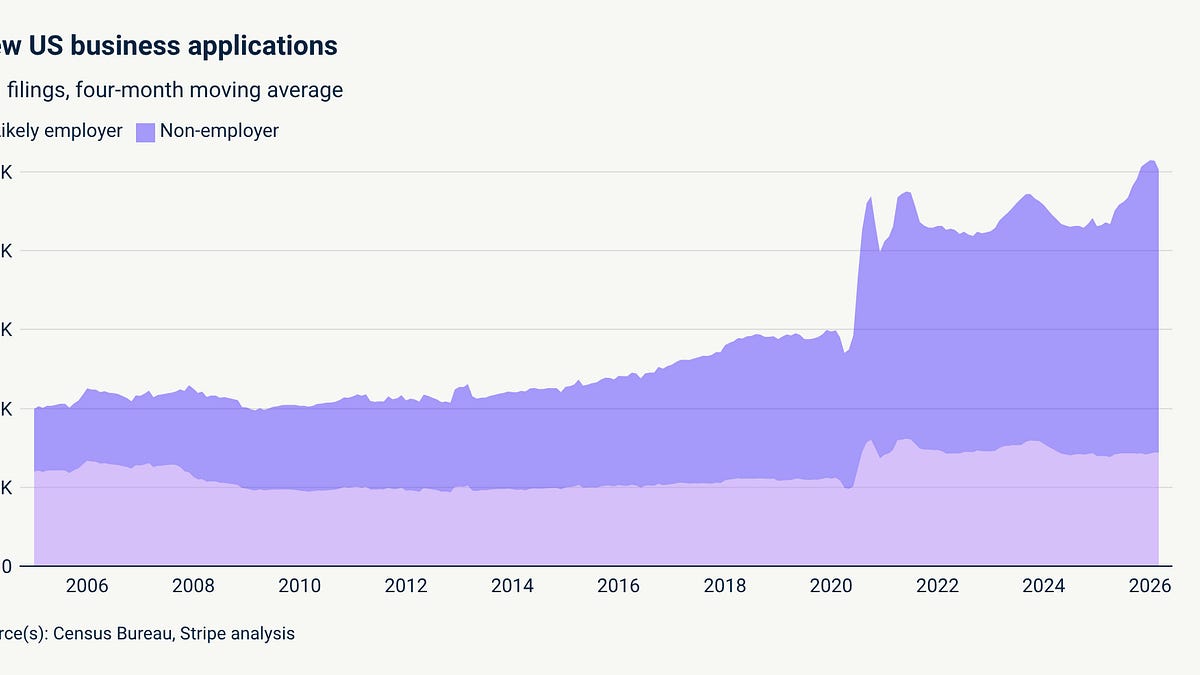
New business applications are rising worldwide. In the United States, where the Census Bureau tracks filings with enough granularity to
www.stripeeconomics.comSolopreneurs, Solow, and the SaaSpocalypseFour of my favourite charts from Stripe Sessions
Some occupations, like radiologists, have proven more resistant to technological displacement than expected
www.stripeeconomics.comK-shaped economy?Yes on Wall Street, not yet on Main Street